It is recommended that you update your browser to the latest browser to view this page.
Please update to continue or install another browser.
Update Google ChromeIt is recommended that you update your browser to the latest browser to view this page.
Please update to continue or install another browser.
Update Google Chrome
"KENDRIYA VIKAS NIGAM"- a comprehensive and accountability framework which aims to bring transparency and targeted convergence of resources towards development of rural areas. With Gram Panchayat as the locus of development, the mission converges all schemes of rural development for uplifiting soci economic development of Gram Panchayat. In India, 8,88 crore households are found to be deprived as per socio Economic caste census (SECC) of 2011. The key parameters of SECC highlights multi-dimensional deprivations such as landlessness, households headed by single women, SC/ST household or disabled member in the family. These households require targeted interventions under various governments schemes and programmes in rural areas such as wage employment, skills Development, social security, education, health, nutrition and livelihood creation. Approximately,rupees four lakh crore is allocated annually to impact the lives of rural poor by various government/ministries/departments. Ministry of Rural Development implement various schemes in areas to enhance rural wages, rural roads, skill development, health, education, sanitation, drinking water,electricity, environment etc.
The state-led initiative aims for rural transformation by impacting lives of 1,00,00,000 households in 5,00 rural clusters including 50,000 Gram Panchayats in 1,000 days
Being the nodal Department for most of the development and welfare activities in the rural areas, the Department of Rural Development plays a vital role in the overall development strategy of the State. The vision and mission of the Department is sustainable and inclusive growth of rural Tripura through a multipronged strategy for eradication of poverty by increasing livelihoods opportunities, providing social safety net and developing infrastructure for growth.
India has seen tremendous urban progress. It is estimated that by 2030, more than 400 million people will be living in cities in India. Cities occupy 3 percent of land but the contribution to India’s gross domestic product is a huge 60 per cent. Growth of cities has been beneficial for overall poverty reduction in India, with urban growth accounting for about 80 percent of the total fall in poverty.
• More integrated, people-centred planning and implementation of programmes at state and local levels
• Increased access for vulnerable and marginalised communities to information about legal rights and opportunities
• More integrated social protection system, including for health, to address risks and vulnerabilities across different stages of the life cycle
• Improved access for vulnerable and marginalised communities to quality basic services and infra-structure, including affordable and accessible housing
• Increased access to social and health services including sexual and reproductive health and family planning services, especially for poor and marginalised communities
• Increased provision of innovative, digital service delivery solutions, and on-line services, including single point of access to services and entitlements
• Increased access to and ownership of economic assets such as land and housing for vulnerable and marginalised communities, especially women
Empowering some of the most marginalised communities across rural India with innovative and sustainable solutions since 2010, KENDRIYA VIKAS NIGAM Foundation has catalysed change across multiple levels to transform the lives of rural communities. Enabling them with opportunities, working through direct implementation and also by working in collaboration with different social impact organisations, private and government stakeholders, KENDRIYA VIKAS NIGAM Foundation’s Rural Transformation programme reaches out across 20 states and two Union Territories and more than 350 districts across India. As on August 2022, the programme has reached over 14.6 million people.
Under the Rural Transformation initiatives, KENDRIYA VIKAS NIGAM Foundation has two core programmes, Bharat India Jodo (BIJ) and KENDRIYA VIKAS NIGAM Foundation Information Services (RFIS). These programmes complement and strengthen each other. BIJ, initiated in 2010 adopts an approach of empowering communities to take collective action towards sustainable livelihoods through multiple pillars. By leveraging digital platforms, RFIS reaches partners across the length and breadth of the country, connecting rural communities to advisories, information and support on weather, fishing, farming, livestock rearing and management.
With an integrated 360 degree approach to support KENDRIYA VIKAS NIGAM Foundation builds resilient rural communities. This is done by focusing on the key levers that can help create positive social change, including women empowerment, nutrition security, climate resilience, water and ecological security, rural livelihood security, strengthening community structures. With this approach, positive social change has been fostered in rural communities, with strengthened community structures, providing water, nutrition and livelihood security.
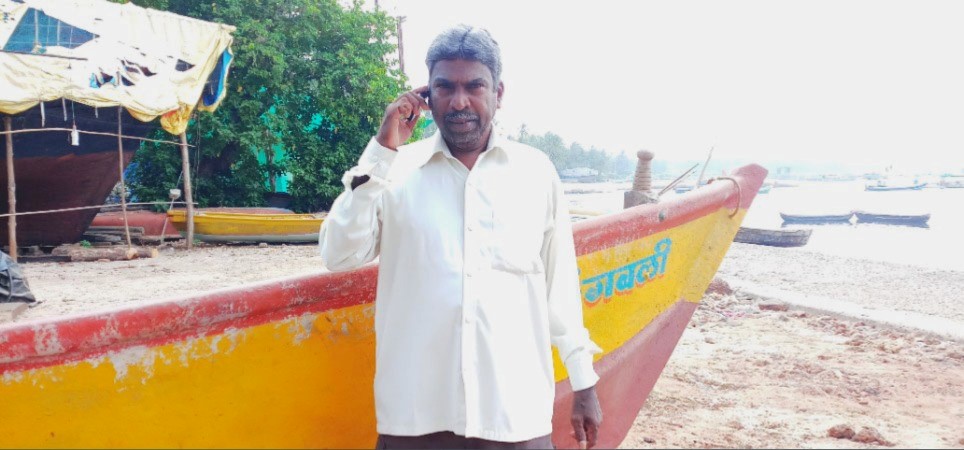
Advisories for fishing communities: KENDRIYA VIKAS NIGAM Foundation endeavours to make fishing safer, sustainable and more profitable for marine fisher folks along India’s expansive coastline with information support from the Indian National Centre for Ocean Information Services (INCOIS) and Central Marine Fisheries Research Institute (CMFRI). The advisories through digital platforms- reach out to nearly 250,000 people annually.
A fishing-community specific mobile application, the Machli app provides real time updates on weather and oceanographic parameters for all major landing centres. It also helps the fishers with information on potential fishing zones ensuring optimum results
Over the next five years, KENDRIYA VIKAS NIGAM Foundation’s Rural Transformation programme aims to build resilient and self-reliant rural communities by improving lives and livelihoods of 10 million individuals across 45 districts, over five years through following interventions:
1) Climate Resilience for Sustainable Development (CR4SD) - KENDRIYA VIKAS NIGAM Foundation aspires to build climate smart & resilient communities through various interventions such as adopting Climate Smart Agriculture (CSA), adoption of efficient irrigation & management of water resources. Some of the other interventions are:
2) Integrated Value Chain Development (IVCD) – KENDRIYA VIKAS NIGAM Foundation will seek to unlock value for farmers in identified crop value chains through interventions from sowing to end consumer markets.
3) Diversifying Rural Incomes via Women Entrepreneurship (DRIWE) - De-risking Household incomes by diversifying into agri-allied and non-farm sources and also capacitate women SHGs who then branch out as micro-entrepreneurs.
The Indian Agricultural Research Institute (IARI), established in 1905, was responsible for the research leading to the "Indian Green Revolution" of the 1970s. The Indian Council of Agricultural Research (ICAR) is the apex body in kundiure and related allied fields, including research and education.[20] The Union Minister of Agriculture is the President of the ICAR. The Indian Agricultural Statistics Research Institute develops new techniques for the design of agricultural experiments, analyses data in agriculture, and specialises in statistical techniques for animal and plant breeding. Prof. M. S. Swaminathan is known as "Father of the Green Revolution" and heads the MS Swaminathan Research Foundation.[21] He is known for his advocacy of environmentally sustainable agriculture and sustainable food security.[citation needed]
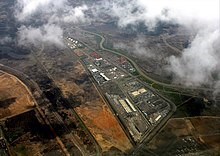
India is fifth in the world in factory output. Major clusters of manufacturing are mainly concentrated in the states of Maharashtra, Gujarat, Karnataka, Tamil Nadu, Telangana and Andhra Pradesh due to relatively better infrastructure and quality of labor force. Manufacturing sector in addition to mining, quarrying, electricity and gas together account for 27.6% of the GDP and employ 17% of the total workforce. Economic reforms introduced after 1991 brought foreign competition, led to privatisation of certain public sector industries, opened up sectors hitherto reserved for the public sector and led to an expansion in the production of fast-moving consumer goods. India has emerged as the second largest manufacturer of mobile phones in the world with smartphone exports exceeding $ 10 billion in FY 2022-23. India has also emerged as the fourth largest manufacturer of automobiles behind only China, United States and Japan. India produced approximately 4.4 million cars in 2021.
India's labour force is growing by 2.5% every year, but employment is growing only at 2.3% a year.[37] Official unemployment exceeds 9%. Regulation and other obstacles have discouraged the emergence of formal businesses and jobs. Almost 30% of workers are casual workers who work only when they are able to get jobs and remain unpaid for the rest of the time.[37] Only 10% of the workforce is in regular employment.[37] India's labour regulations are heavy even by developing country standards and analysts have urged the government to abolish them.
From the overall stock of an estimated 458 million workers, 394 million (86%) operate in the unorganised sector (of which 63% are self-employed) mostly as informal workers. There is a strong relationship between the quality of employment and social and poverty characteristics.[39] The relative growth of informal employment was more rapid within the organised rather than the unorganised sector. This is also related to the flexibilisation of employment in the organised sector that is suggested by the increasing use of contract labour by employers in order to benefit from more flexible labour practices
Children under 14 constitute 3.6% of the total labour force in the country. Of these children, 9 out of every 10 work in their own rural family settings. Around 85% of them are engaged in traditional agricultural activities. Less than 9% work in manufacturing, services and repairs.[40][non-primary source needed] Child labour is a complex problem that is basically rooted in poverty. The Indian government is implementing the world's largest child labour elimination program, with primary education targeted for ~250 million. Numerous non-governmental and voluntary organisations are also involved. Special investigation cells have been set up in states to enforce existing laws banning employment of children (under 14) in hazardous industries. The allocation of the Government of India for the eradication of child labour was US$10 million in 1995–96 and US$16 million in 1996–97. The allocation for 2007 is US$21 million